sailfishscuba.com
Home
HOW TO BOOK YOUR TOUR
Dive Tour Prices
Snorkeling Tour Prices
Training
Try Scuba Diving
PADI Scuba Youth Programs
PADI Open Water Diver
PADI Advanced Open Water
PADI Rescue Diver Course
Private Boat Charters
Why Visit Key Largo
About Us
  • Blue Star
  • Mission & Vision
  • Questions and Answers
  • Sail Fish Scuba Policies
  • Meet the Team
Key Largo Scuba Diving
  • Molasses Reef
  • Christ of the Abyss
Florida Keys Wreck Dives
  • Key Largo Wreck Dives
  • SS Benwood (Wreck)
Dive Sites
Key Largo Shore Diving
Boat Rider
Guest Reviews
Guest FREE Photos
Key Largo Things To Do
  • Key Largo Things To Do
  • Key Largo Restaurants
  • Key Largo Weather Report
sailfishscuba.com
Home
HOW TO BOOK YOUR TOUR
Dive Tour Prices
Snorkeling Tour Prices
Training
Try Scuba Diving
PADI Scuba Youth Programs
PADI Open Water Diver
PADI Advanced Open Water
PADI Rescue Diver Course
Private Boat Charters
Why Visit Key Largo
About Us
  • Blue Star
  • Mission & Vision
  • Questions and Answers
  • Sail Fish Scuba Policies
  • Meet the Team
Key Largo Scuba Diving
  • Molasses Reef
  • Christ of the Abyss
Florida Keys Wreck Dives
  • Key Largo Wreck Dives
  • SS Benwood (Wreck)
Dive Sites
Key Largo Shore Diving
Boat Rider
Guest Reviews
Guest FREE Photos
Key Largo Things To Do
  • Key Largo Things To Do
  • Key Largo Restaurants
  • Key Largo Weather Report
More
  • Home
  • HOW TO BOOK YOUR TOUR
  • Dive Tour Prices
  • Snorkeling Tour Prices
  • Training
  • Try Scuba Diving
  • PADI Scuba Youth Programs
  • PADI Open Water Diver
  • PADI Advanced Open Water
  • PADI Rescue Diver Course
  • Private Boat Charters
  • Why Visit Key Largo
  • About Us
    • Blue Star
    • Mission & Vision
    • Questions and Answers
    • Sail Fish Scuba Policies
    • Meet the Team
  • Key Largo Scuba Diving
    • Molasses Reef
    • Christ of the Abyss
  • Florida Keys Wreck Dives
    • Key Largo Wreck Dives
    • SS Benwood (Wreck)
  • Dive Sites
  • Key Largo Shore Diving
  • Boat Rider
  • Guest Reviews
  • Guest FREE Photos
  • Key Largo Things To Do
    • Key Largo Things To Do
    • Key Largo Restaurants
    • Key Largo Weather Report
  • Sign In
  • Create Account

  • My Account
  • Signed in as:

  • filler@godaddy.com


  • My Account
  • Sign out

Signed in as:

filler@godaddy.com

  • Home
  • HOW TO BOOK YOUR TOUR
  • Dive Tour Prices
  • Snorkeling Tour Prices
  • Training
  • Try Scuba Diving
  • PADI Scuba Youth Programs
  • PADI Open Water Diver
  • PADI Advanced Open Water
  • PADI Rescue Diver Course
  • Private Boat Charters
  • Why Visit Key Largo
  • About Us
    • Blue Star
    • Mission & Vision
    • Questions and Answers
    • Sail Fish Scuba Policies
    • Meet the Team
  • Key Largo Scuba Diving
    • Molasses Reef
    • Christ of the Abyss
  • Florida Keys Wreck Dives
    • Key Largo Wreck Dives
    • SS Benwood (Wreck)
  • Dive Sites
  • Key Largo Shore Diving
  • Boat Rider
  • Guest Reviews
  • Guest FREE Photos
  • Key Largo Things To Do
    • Key Largo Things To Do
    • Key Largo Restaurants
    • Key Largo Weather Report

Account

  • My Account
  • Sign out

  • Sign In
  • My Account

Blue Star Dive Center Key Largo

What Is a Blue Star Dive Center?

Dive Responsibly in Key Largo | Blue Star Dive Center

 Choosing a Blue Star Dive Center means diving with an operator committed to enjoying the Florida Keys responsibly while helping protect what makes them so special. 


As a Blue Star Dive Center, Sail Fish Scuba emphasizes:

  • Responsible, reef-safe diving and snorkeling practices 
  • Marine conservation awareness and education 
  • Protecting coral by minimizing physical contact 
  • Understanding local habitats and protected areas 
  • Supporting the continued protection of the Florida Keys reef system 


Those of us who visit the reef also have a responsibility to minimize our impact. Good buoyancy, keeping hands and equipment away from coral, respecting marine life, and using designated mooring buoys instead of anchoring on the reef are simple but important ways divers, snorkelers, and boat operators can help protect this environment.


Overall, it comes down to a simple idea: take only memories, leave only bubbles, and help protect the reefs for generations to come. 


Florida Keys National Marine Sanctuary

 Established in 1990, the Florida Keys National Marine Sanctuary was created to protect the remarkable marine environment surrounding the Florida Keys. Today, the Sanctuary protects over four thousand square miles of waters, extending from south of Miami through the Florida Keys and west towards the Dry Tortugas.

Its protected waters include coral reefs, seagrass meadows, mangrove habitats, shipwrecks, and thousands of species of marine life. The Sanctuary was established following growing concerns about declining reef health and a series of major vessel groundings that damaged the Florida Keys coral reef tract.

For those of us who dive these waters, the Sanctuary plays an important role in protecting the reefs and marine habitats that make the Florida Keys such an extraordinary place to explore.

Responsible Diving in the Sanctuary

 The Florida Keys National Marine Sanctuary has regulations in place to protect its natural and historical resources while allowing people to enjoy these waters responsibly. Throughout the Sanctuary, visitors may not damage, touch, or remove coral, whether living or dead, or disturb protected historical and archaeological resources. Certain areas within the Sanctuary have additional regulations and protections designed to safeguard particularly sensitive habitats and marine life. 


Why Our Oceans Matter

Ocean

 Our oceans are essential to the health of the planet and to life around the world. Beyond being home to an incredible variety of marine species, they influence our climate, contribute to the air we breathe, and provide food and livelihoods for billions of people. Coastal and marine environments also bring people together for recreation and exploration, with millions traveling each year to experience everything the ocean has to offer—both on the water and beneath the surface. 

Coral Reefs

 Among the many ecosystems found throughout the ocean, coral reefs are some of the most diverse and frequently visited. Often called the “rainforests of the sea,” coral reefs provide habitat for approximately 25% of all marine species, despite covering less than 1% of the ocean floor.

Their incredible diversity also comes with vulnerability. Reef-building corals depend on a relatively specific set of environmental conditions, particularly water temperature, salinity, and depth, making coral reef ecosystems especially sensitive to changes in their surroundings.

Making a Difference

 Our oceans and coral reefs face significant challenges, from rising water temperatures and ocean acidification to plastic pollution and other human impacts. While these are global issues, the choices we make at a local and individual level still matter.


That belief is part of why Sail Fish Scuba chooses to participate in the Blue Star program. As a dive operator in the Florida Keys, we have an opportunity to educate our guests, encourage responsible diving and snorkeling, and help reduce our impact on the places we visit.


We believe every diver, snorkeler, and operator can play a part. Through the choices we make and the way we interact with the marine environment, together we can help protect coral reefs so future generations of divers and snorkelers can experience them too.

Florida Keys Environment

Location & Formation

The Florida Keys form a long chain of islands beginning near the southern tip of Florida and curving southwest toward Key West and the Dry Tortugas, which lie about 70 miles west of Key West. The islands are composed largely of limestone and ancient reef material, reflecting a geological history shaped by changing sea levels.


Stretching nearly 220 miles, the Florida Keys include roughly 1,700 islands, although many are small and uninhabited. Only a portion are connected by bridges. With the Atlantic Ocean on one side and Florida Bay on the other, the Keys are surrounded by an extensive marine environment of coral reefs, seagrass beds, mangroves, and shallow coastal waters.

Weather

 The Florida Keys enjoy a warm, subtropical maritime climate influenced in part by the surrounding waters and nearby Gulf Stream. Winters are generally mild, with daytime temperatures commonly reaching the mid-to-upper 70s°F and cooler evenings in the 60s°F. For much of the rest of the year, daytime temperatures regularly climb into the 80s°F and above.


Diving conditions vary throughout the year. Winter cold fronts can bring stronger winds and rougher seas, particularly along the outer reefs, and many divers prefer a wetsuit as water temperatures cool. Summer typically brings warmer water and periods of calmer seas, although thunderstorms and larger weather systems can temporarily change conditions.


The Florida Keys are also within the Atlantic hurricane belt. Hurricane season officially runs from June 1 through November 30, with activity generally highest from late summer into the fall. As with any ocean destination, daily diving conditions ultimately depend on the weather, wind, and overall ocean state.

Currents, Tides, and Visibility

 Water movement throughout the Florida Keys is strongly influenced by the nearby Gulf Stream. Because its position and strength can vary, current conditions on the reefs are not always predictable. A dive site that has noticeable current one day may have very little the next day, and the direction of the flow can change as well.


Conditions are often more moderate within Hawk Channel, the stretch of water between the Keys and the offshore reef tract. Stronger localized flow can occur around channels and passes as tides move water between Florida Bay and the Atlantic. Tidal changes themselves are relatively small in the Keys, with the difference between high and low tide generally less than two feet.


 Visibility in the Florida Keys can vary with weather, tides, and water movement. Conditions are often especially good along the outer reef tract, where clear ocean water circulates through the area. Calm days generally bring the best visibility, while stronger winds and rougher seas can stir up the water, reducing underwater visibility and creating more surface chop. 


Best Time to Dive in the Florida Keys

 Scuba diving in Key Largo is available throughout the year, with each season offering slightly different conditions. Spring and summer typically bring warmer water, longer stretches of calm seas, and excellent opportunities to explore Key Largo’s reefs and wrecks. Water temperatures during the warmer months commonly reach the low-to-mid 80s°F.


During the winter, water temperatures are cooler and passing cold fronts can occasionally bring stronger winds.  Late summer and fall remain warm, but they also coincide with Atlantic hurricane season, so weather conditions can be more variable.


There really isn’t one “perfect” month to dive Key Largo. Visibility, currents, and sea conditions can change from day to day, but with warm subtropical waters and a wide variety of dive sites, Key Largo offers great diving opportunities in every season.

Florida Keys Ecosystem

Florida's Coral Reefs

Just offshore of the Florida Keys lies an extensive coral reef ecosystem and one of the features that makes diving in this region so unique. Southeast Florida is home to the largest coral reef ecosystem in the continental United States. 


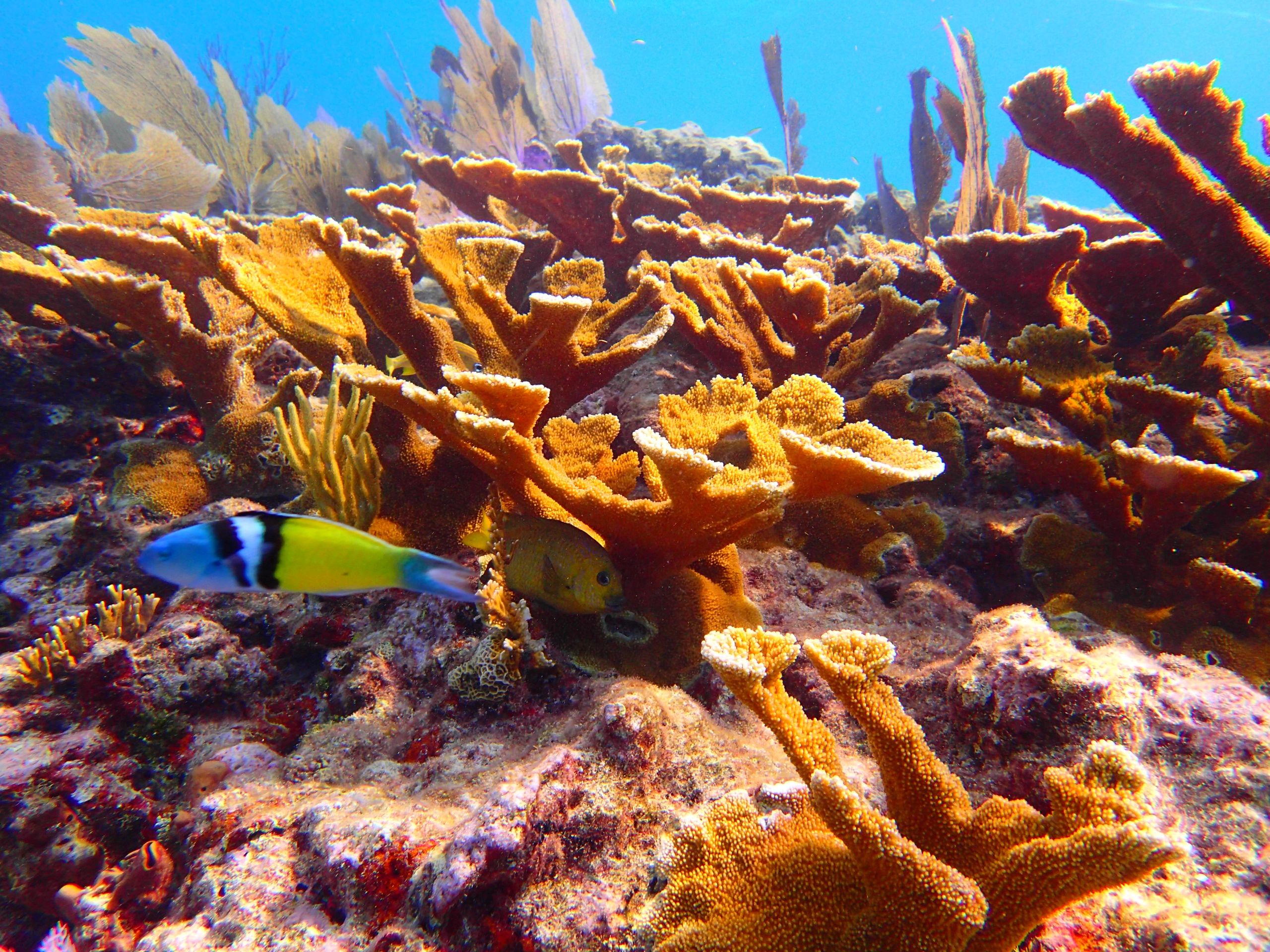
The reef is made up of a diverse collection of habitats where hard and soft corals, sea fans, and sponges provide shelter and feeding grounds for marine life. Elkhorn, staghorn, brain, and star corals are among the species found here, alongside sea turtles, sharks, moray eels, groupers, snappers, jacks, and an enormous variety of smaller reef inhabitants.


Like coral reefs around the world, Florida’s reef faces considerable environmental pressures. Rising ocean temperatures, coral disease, changes in water quality, coastal development, invasive species, and other human impacts have contributed to the loss and degradation of coral throughout the region.


Diving and snorkeling can place additional pressure on sensitive reef environments, which is why following responsible practices and taking care to avoid damaging coral are so important. By enjoying the reef responsibly today, we can help protect it for future generations. 

Mangroves

 Mangroves are an important part of the Florida Keys, with red, black, and white mangroves lining many of the islands and waterways. Their extensive root systems provide food, shelter, and nursery habitat for fish, birds, and a wide variety of wildlife. At Sail Fish Scuba, our trip to the reef begins along a mangrove-lined channel before reaching the open ocean.


Mangroves also help stabilize shorelines, trap sediment, reduce erosion, and provide protection from waves and storms. Together with seagrass beds and coral reefs, they form an interconnected ecosystem that supports marine life throughout the Florida Keys.


Seagrass beds

 The Florida Keys are home to large seagrass beds that play an important role in the marine environment. Turtle grass, shoal grass, and manatee grass provide food and shelter for sea turtles, manatees, crustaceans, and many species of fish. Young fish also use these grassy areas as a place to feed, grow, and find protection.


Seagrass beds also help keep the water clear by holding the sandy bottom in place and trapping sediment. Like plants on land, seagrasses absorb carbon dioxide and produce oxygen, making them an important part of a healthy marine ecosystem.


Protecting seagrass beds is an important part of conserving the Florida Keys marine environment. These habitats support countless marine species and are closely connected to the health of the surrounding reefs and coastal waters.

Key Largo: Where the Florida Keys Begin

Diving in Key Largo


Known as the gateway to the Florida Keys, Key Largo is the first major island visitors reach when traveling south from the Florida mainland. With the Atlantic Ocean on one side and Florida Bay and the Everglades on the other, the island is surrounded by an incredible variety of coastal and marine habitats.


Offshore is where Key Largo really stands out. Divers and snorkelers have access to extensive coral reefs, including Molasses Reef and Elbow Reef, known for their coral formations, sandy channels, and abundant marine life. The surrounding waters also hold historic shipwrecks as well as artificial reefs intentionally placed to create new marine habitat and diving opportunities.


Among the best known is the Spiegel Grove, a 510-foot former U.S. Navy ship resting offshore of Key Largo. From shallow reefs to historic wrecks and impressive artificial reefs, Key Largo offers an unusually diverse range of dive sites within a relatively small area.

Sail Fish Scuba

 Discover Key Largo scuba diving with Sail Fish Scuba, a small, family-run PADI 5-Star Dive Center offering daily guided trips to the Florida Keys’ coral reefs and historic wrecks. Whether you’re trying scuba for the first time, working toward your PADI certification, or an experienced diver looking to explore more of Key Largo, our focus is on small groups, personal attention, safety, and plenty of time in the water.


Since 2012, Sail Fish Scuba has welcomed divers from around the world to experience what makes diving in Key Largo so special. Our guests often describe our crew as patient, knowledgeable, professional, and welcoming, with many saying their dives feel more like diving with friends than being part of a crowded charter. Every recreational scuba trip includes a PADI professional in the water at no additional charge, along with complimentary underwater photos and videos so you can enjoy the dive while we capture the memories.


From shallow coral reefs filled with tropical marine life to some of Key Largo’s best-known wrecks, we’re here to help you experience the Florida Keys one dive at a time.

Daily Snorkeling and Scuba Diving Charters  


Morning 2-Tank Dive Trip — Departs at 8:00 AM
Afternoon 2-Tank Dive Trip — Departs at 1:00 PM


 Dive trips operate daily, year-round, exploring a variety of sites throughout the Florida Keys. 

The best of Key Largo is underwater—come experience it for yourself!


  • Home
  • Training
  • Questions and Answers
  • Sail Fish Scuba Policies
  • Meet the Team
  • Guest Reviews
  • Guest FREE Photos

sailfishscuba.com

103100 Overseas Highway #33 Key Largo, FL 33037

305-453-3446

Copyright © 2026 sailfishscuba.com - All Rights Reserved.

Powered by

This website uses cookies.

We use cookies to analyze website traffic and optimize your website experience. By accepting our use of cookies, your data will be aggregated with all other user data.

DeclineAccept