Signed in as:
filler@godaddy.com
Signed in as:
filler@godaddy.com

At the northern end of Key Largo, Elbow Reef stretches along the outer reef line with established coral formations and several historic shipwrecks. The wrecks scattered throughout the area add a unique piece of maritime history to this well-known Key Largo dive site.

Elbow Reef gets its name from the way the reef projects outward from the surrounding reef line, resembling the bend of an elbow. That same shallow reef has proven hazardous to vessels over the years, and today remnants of several historic shipwrecks can be found among its coral formations.
The reef features a classic spur-and-groove formation, with defined coral ridges separated by sandy channels and areas of reef rubble. Much of Elbow Reef is relatively shallow, making it an excellent area for both scuba diving and snorkeling, while deeper sections extend toward the outer edge of the reef.
Many of Elbow Reef’s dive sites are named for features divers can still find underwater. Train Wheels takes its name from old railroad wheels that became part of the wreckage on the reef, while Anchor Chain features a substantial section of chain that has gradually become incorporated into the reef. Other well-known sites around Elbow include The Fingers, South Ledges, Elbow Ledge, the City of Washington, and the Hannah M. Bell wreck.
With shallow coral formations, historic wreckage and plenty of areas to explore, Elbow Reef combines some of Key Largo’s maritime history with one of its most recognizable outer reef systems.
Sail Fish Scuba is proud to be a Blue Star Dive Operator in Key Largo, supporting responsible and sustainable scuba diving practices in the Florida Keys.
Through NOAA’s Blue Star program, we help protect the Florida Keys National Marine Sanctuary by promoting reef-friendly diving, conservation, and education for our guests.

Wreck diving offers a unique look into Key Largo’s maritime history while exploring sites that have become part of the surrounding reef. For underwater photographers, wrecks offer interesting structure, natural light, and abundant marine life. Key Largo’s shallow wrecks are a great introduction for divers interested in exploring something beyond the reef.

Green sea turtles can blend surprisingly well into the reef. Keep your eyes open while diving Elbow Reef—you may find one tucked in among the coral.

Flamingo tongue snails and nudibranchs are always a fun find for macro photographers. They’re also a great reason to practice good buoyancy—slow down, get steady, and capture the shot without disturbing the reef. Site Depth: 20–30 feet
Diver level: Open Water

Elkhorn coral can be found throughout areas of Elbow Reef and is one of the Caribbean’s important reef-building corals. Its large, branching structure provides shelter and habitat for fish and other reef organisms, helping create the complex reef environment we explore today.

Spiny lobsters are a common sight around Elbow Reef, often tucked beneath coral ledges and hiding in crevices during the day. Look closely—you may spot their long antennae sticking out before you see the lobster itself.

For years, divers exploring Elbow Reef knew the Hannah M. Bell simply as “Mike’s Wreck,” until its true identity was confirmed in 2012. The British steamship ran aground on Elbow Reef in 1911, and today its scattered remains rest among sandy channels and coral formations. Its shallow depth, abundant tropical fish, and typically good visibility make it an interesting site for both divers and snorkelers to explore.
Site Depth: 25–30 feet
Diver level: Open Water

The queen angelfish is one of the most striking fish you’ll spot on Florida Keys reefs, with brilliant blue and yellow coloring and a distinctive crown-like marking on its forehead. Often seen alone or in pairs, these beautiful reef residents spend much of their time feeding on sponges and other small reef organisms.

Elbow Reef is home to several historic wrecks, giving divers plenty to explore throughout the reef. Exploring these wrecks is like diving into a piece of Key Largo’s maritime history, where old ship remains have become part of the reef and a home for marine life.

The shallow sites of Elbow Reef are home to a wide variety of tropical fish, including the spotfin butterflyfish. Look for the small dark spot near the rear of its dorsal fin that gives this fish its name. Active during the day, spotfin butterflyfish spend much of their time searching the reef for small invertebrates and other food—a colorful little species to keep an eye out for while exploring Elbow Reef.

Are you an underwater photographer? Wrecks are a great place to put that passion to work. Different angles, interesting structures, and natural sunlight filtering through the water create endless opportunities for unique underwater shots.

The Atlantic trumpetfish is a familiar sight on Florida Keys reefs, easily recognized by its long, slender body and tube-shaped snout. These clever hunters often hover vertically among sea fans and coral, using their shape and surroundings as camouflage while waiting for small fish to pass by.
Diver Level: Open Water

One of our favorite things about Elbow Reef is the endless opportunity for underwater photography. Its shallow depths and natural sunlight create beautiful conditions for capturing wrecks, coral, and marine life. If underwater photography is something you’d like to pursue, consider taking the PADI Digital Underwater Photographer Specialty and learn how to take your underwater shots to the next level.

Elbow Reef is a fantastic spot for underwater enthusiasts, from snorkelers to divers. Its shallow reef and varied marine habitat attract an impressive mix of marine life, including schools of grunts, grouper, barracuda, nurse sharks, and the occasional Caribbean reef shark.

One of the coolest things about exploring the Hannah M. Bell and City of Washington is seeing how nature has taken over. Coral, sponges, and marine growth now cover much of the wreckage, making these historic ships feel like a natural part of Elbow Reef. Schools of grunts and parrotfish are common, while moray eels and spiny lobsters can be found tucked among the reef. Keep an eye out for larger visitors, including goliath grouper.

The Hannah M. Bell is a historic steamship that ran aground on Elbow Reef in 1911 while carrying coal to Mexico. Today, its scattered remains rest in just 15–25 feet of water, creating a shallow Key Largo wreck where divers can explore more than a century of maritime history.

A closer look at Elbow Reef reveals just how much life can share a small section of reef. Mustard hill coral, tube sponges, and sea fans grow alongside one another, creating shelter and habitat for countless small reef organisms. Mustard hill coral is a common Caribbean stony coral, easily recognized by its rounded growth and tiny, closely packed coral polyps.

Key Largo is a fantastic place to complete your PADI Wreck Diver Specialty, with a variety of wrecks to explore along the way. Learn about wreck diving hazards, proper dive planning, navigation, and the techniques needed to safely explore these fascinating pieces of maritime history.

Along with hard corals like staghorn and elkhorn, Florida Keys reefs are home to soft corals such as common sea fans and sea plumes. Sea fans are recognized by their broad, fan-like shape, while sea plumes have bushy, feather-like branches. Both sway with the current, creating some of the most recognizable scenery on Key Largo’s reefs.

The scrawled filefish is one of the more striking fish you may spot around Elbow Reef, easily recognized by the bright blue, maze-like markings that cover its body. A common sight on Florida Keys reefs, this beautiful fish can even change its color and pattern to blend in with its surroundings.
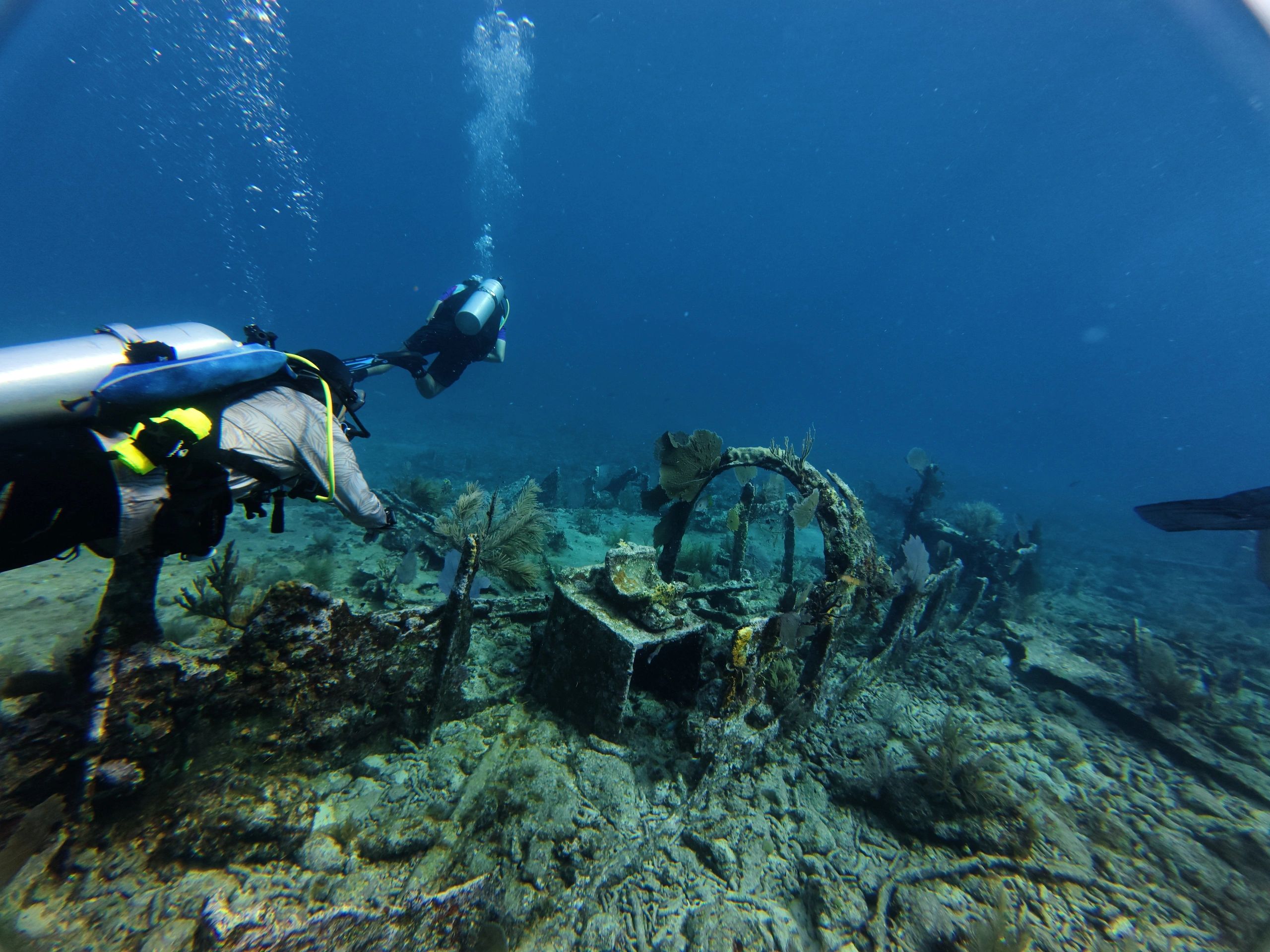
The City of Washington is one of the best-known historic wrecks on Elbow Reef. Built in 1877, the iron-hulled steamship carried passengers and cargo throughout the Caribbean and later helped rescue survivors of the USS Maine explosion in Havana Harbor. In 1917, while being towed as a barge, she ran aground on Elbow Reef and was lost.
Today, the wreck rests in about 25 feet of water, with much of the original ship scattered across the reef.
One of its most recognizable and photographed features is the curved iron hull framing still visible along the wreck. Its shallow depth, marine life, and remaining structure make the City of Washington an interesting site for both divers and snorkeler


Looking for a small, guided scuba diving experience in Key Largo? We keep our groups small, include an in-water guide, and are all about enjoying a great day of diving. If that’s your vibe, come explore Elbow Reef with Sail Fish Scuba.
Discover Key Largo scuba diving with Sail Fish Scuba, a small, family-run PADI 5-Star Dive Center offering daily guided trips to the Florida Keys’ coral reefs and historic wrecks. Whether you’re trying scuba for the first time, working toward your PADI certification, or an experienced diver looking to explore more of Key Largo, our focus is on small groups, personal attention, safety, and plenty of time in the water.
Since 2012, Sail Fish Scuba has welcomed divers from around the world to experience what makes diving in Key Largo so special. Our guests often describe our crew as patient, knowledgeable, professional, and welcoming, with many saying their dives feel more like diving with friends than being part of a crowded charter. Every recreational scuba trip includes a PADI professional in the water at no additional charge, along with complimentary underwater photos and videos so you can enjoy the dive while we capture the memories.
From shallow coral reefs filled with tropical marine life to some of Key Largo’s best-known wrecks, we’re here to help you experience the Florida Keys one dive at a time.
Daily Snorkeling and Scuba Diving Charters
Morning 2-Tank Dive Trip — Departs at 8:00 AM
Afternoon 2-Tank Dive Trip — Departs at 1:00 PM
Dive trips operate daily, year-round, with the opportunity to explore multiple sites along Elbow Reef.

sailfishscuba.com
103100 Overseas Highway #33 Key Largo, FL 33037